


Relevant 3rd Cycle Recommendations: 127.147-148; 127.165; 127.150; 127.152; 127.202-204; 127.157; 127.200; 127.206
Context
Although Moldova has strengthened its legislative and policy framework on gender equality and violence against women, implementation remains uneven with particular regard to Roma women and girls living in rural and socially excluded communities. Discrimination and anti-Roma sentiments continue to affect Roma women’s and girls’ access to employment, education, and public services. Also gender-based violence remains widespread but largely underreported because of Roma women’s lack of trust in institutions, economic dependence, community control, illiteracy, racial profiling, discrimination and stigma preventing them to seek assistance. Among the most serious concerns affecting Roma women and girls are child, early, and forced marriages and reproductive violence. These practices contribute to school dropout, early pregnancy, migration of extended families, domestic violence, and long-term social exclusion. Roma women and girls displaced from Ukraine face additional barriers, including language and cultural obstacles, poverty, illiteracy, social isolation, and limited access to services. Finally, Roma women returning to Moldova after trafficking, domestic violence, or migration often lack access to housing, employment, healthcare, and long-term reintegration support, increasing their risk of exploitation, gender-based violence, and re-trafficking.
Key Questions
- What measures has the State taken to prevent and eliminate child, early, and forced marriages and to protect Roma girls at risk?
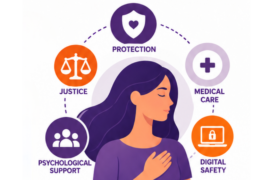
- What steps have been taken to improve Roma women’s and girls’ access to justice, protection mechanisms, and culturally appropriate GBV services?
- What measures are in place to combat discrimination and anti-Roma prejudice affecting Roma women’s and girls’ access to education, employment, public services, and decision-making?
- What measures has the State taken to improve the collection of disaggregated data on Roma women and girls to monitor policy implementation?
Recommendations:
- Recognise anti-Roma prejudice as a specific form of racism and strengthen measures to combat discrimination against Roma women and girls.
- Prevent and eliminate child, early, and forced marriages through coordinated prevention, protection, and accountability measures.
- Improve access to quality education, healthcare, sexual and reproductive health, and culturally appropriate GBV services.
- Expand specialised support services for Roma women and girls who are survivors of gender-based violence, particularly in rural and underserved areas.
- Ensure the meaningful participation of Roma women and their organizations in policymaking, implementation, and monitoring.
- Recognise reproductive violence as a form of gender-based violence and strengthen the capacity of relevant professionals to identify and respond to it.
- Develop long-term reintegration programs for Roma women survivors of trafficking and domestic violence, including housing, employment, psychosocial support, and legal assistance.
- Promote digital inclusion for Roma women and girls by expanding access to technology, enhancing digital literacy, and ensuring safe digital public services.


Comentarii sunt blocate.