

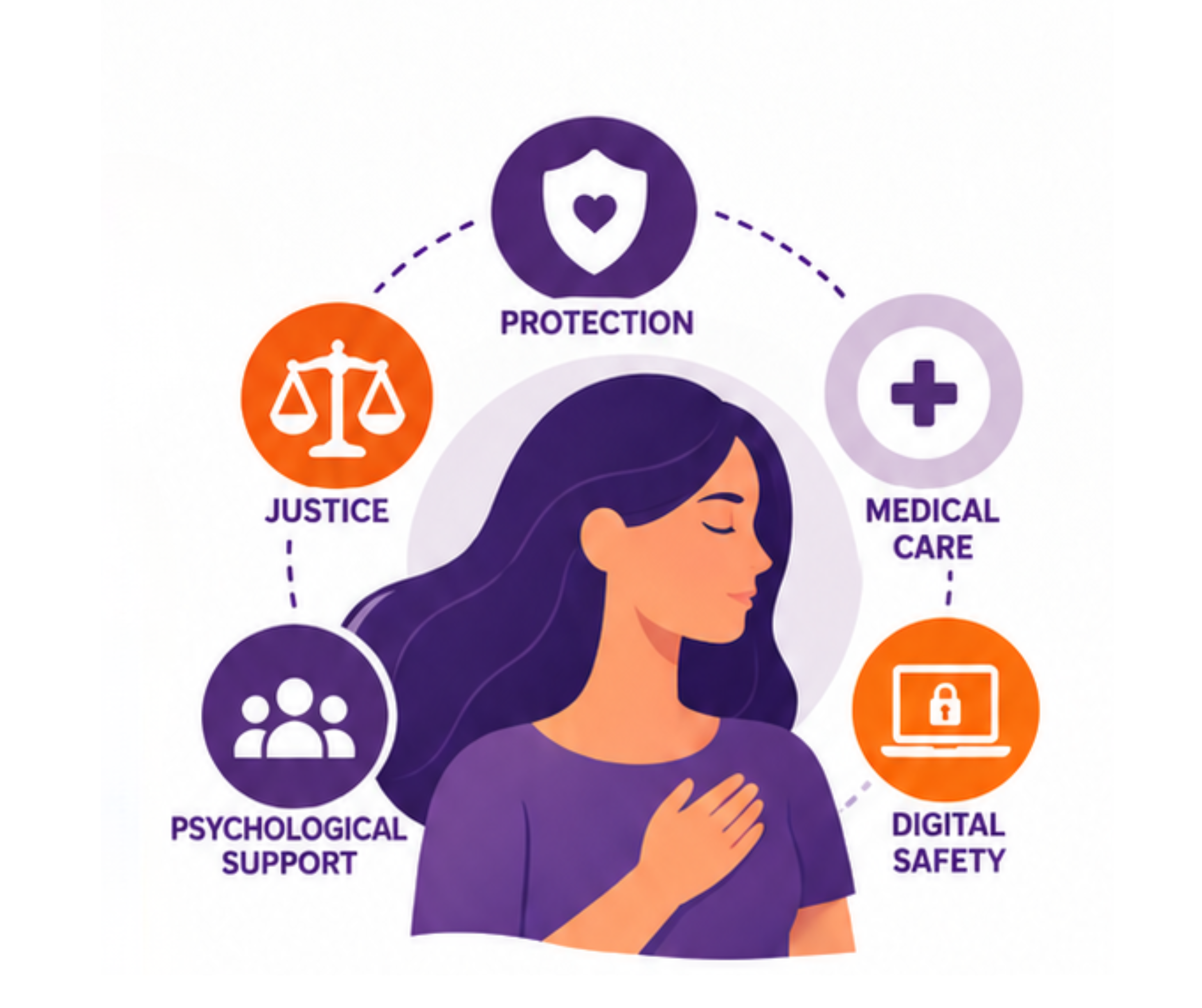
Relevant 3rd Cycle Recommendations: 127.164; 127.168-185; 127.188
Context
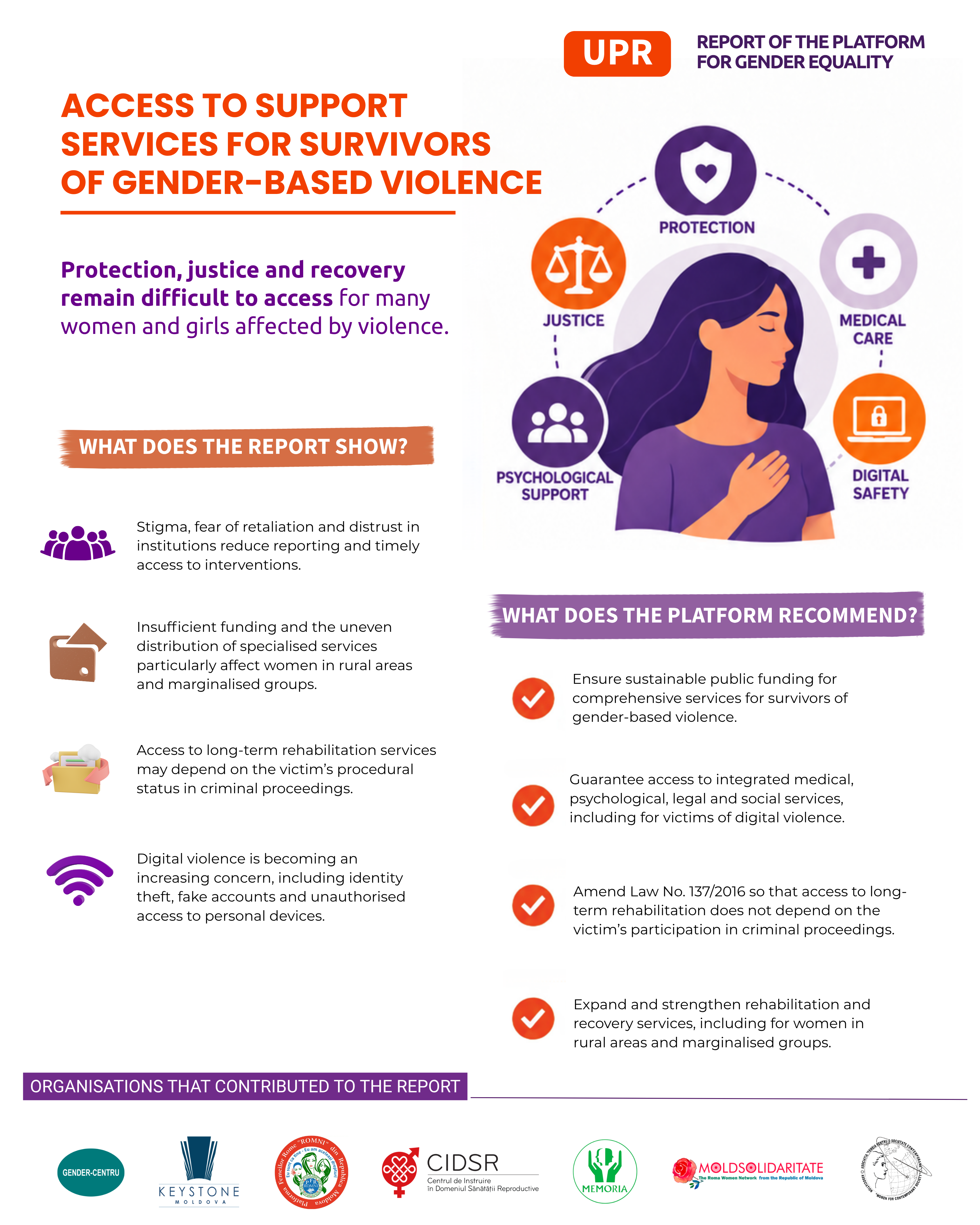
Gender-based violence (GBV), including in the digital sphere, remains an important human rights issue in the Republic of Moldova. Despite the ratification of the Istanbul Convention and the adoption of 23 UPR Recommendations addressing GBV during the 3rd Universal Periodic Review cycle, many women and girls continue to face barriers to protection, justice, and rehabilitation. GBV victims experience stigma, fear of retaliation, and distrust of law enforcement and judicial bodies which severely limits reporting and timely interventions. Furthermore, insufficient multidisciplinary cooperation, limited sustainable funding for specialized GBV services, and the uneven spatial distribution of assistance disproportionately affect rural and marginalized groups. A further concern is that Law No. 137/2016 excludes state funding for GBV victim rehabilitation and hampers access to rehabilitation for GBV victims as access to long-term support services remains dependent on the victim’s procedural status in criminal proceedings. The recommendations of the 3rd UPR cycle have therefore been only partially implemented.
Key Questions
- What concrete steps will the Government take to revise Law No. 137/2016 so that access to long‑term rehabilitation for GBV and torture survivors is no longer depending on the victim’s procedural status, in line with CAT General Comment No. 3 and international standards?
- What measures will be implemented to strengthen timely, trauma‑informed investigations and improve medico‑psychological documentation of GBV cases, particularly in rural areas and among marginalized groups such as Roma women and women with disabilities?
- What actions will be taken to recognize, prevent, and investigate digital forms of gender‑based violence, given the rising prevalence of identity theft, fake accounts, and unauthorized access to personal devices affecting women and girls affected by GBV in Moldova?
- What structural barriers continue to prevent marginalized women, including Roma, disabled, and refugee women, from accessing GBV multidisciplinary services and justice?
Recommendations
- Secure sustainable public funding for comprehensive GBV survivor services, expanding medical, psychological, and social rehabilitation services.
- Provide all victims of GBV, including victims of digital violence, with full rehabilitation and restoration means through a comprehensive approach integrating medical, psychological, legal, and social services, in accordance with Articles 11 – 15 and Article 14 of the UN Convention Against Torture (CAT/C/GC/3).
- Amend Law No. 137/2016 to adequately reflect the realities and needs of GBV survivors, ensuring access to long-term rehabilitation services regardless of their involvement in criminal proceedings (aligned with CAT/C/GC/3, Recommendation CM (2023)2, and EU Directive 2012/29).

Comentarii sunt blocate.