

Relevant 3rd Cycle Recommendations: 127.190; 127.191; 127.193; 127.157
Context
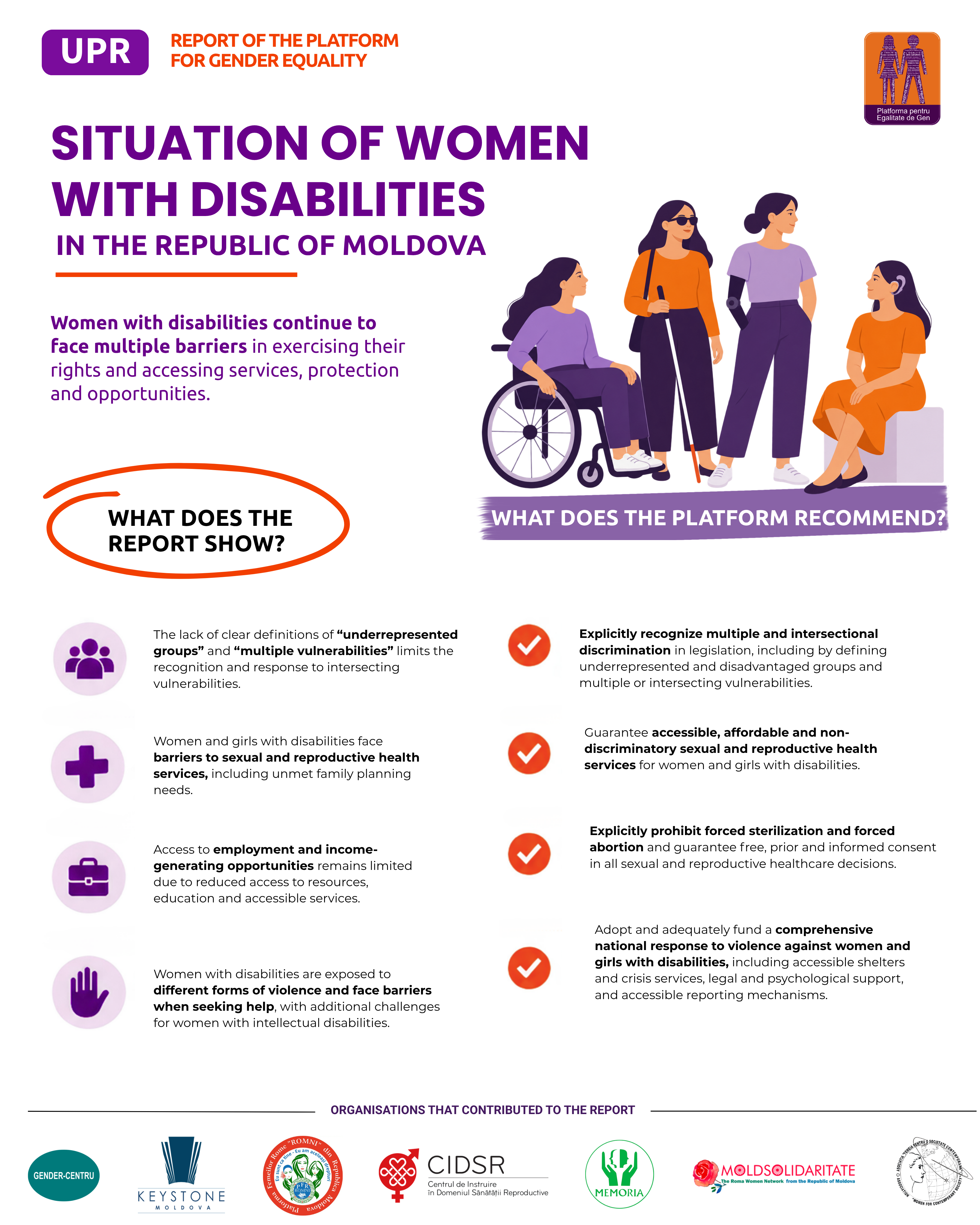
The national legislation lacks explicit definitions for “underrepresented group” and “multiple vulnerabilities.” This omission hinders the effective regulation and holistic support of individuals facing intersecting vulnerabilities. Progress comes with the new draft of the National Program on Social Inclusion of Persons with Disabilities for 2026-2030, which mainstreams gender equality to a larger extent than the previous one. Moreover, women with disabilities face barriers to sexual and reproductive healthcare, including inaccessible services, unmet family planning needs, and insufficient legal protection against forced sterilization and abortion. Women with disabilities also face barriers to employment and income generation due to limited access to resources, education, and accessible services. Women with disabilities are also frequently exposed to violence including psychological or emotional abuse, and physical, economic, spiritual and sexual violence. A key issue is that women with disabilities face significant barriers to seeking help. Several of these women mentioned that their disability impeded their ability to do so due to physical, social, and informational barriers. In particular, women with intellectual disabilities are likely to encounter significant barriers in preventing and combating abuse. State authorities have failed to monitor situations adequately, and the judicial response is not always adequate. These failures highlight the need for systemic reform and dedicated support services tailored to persons with disabilities, including accessible shelters and disability-sensitive legal assistance.
Key Questions
- What concrete legislative amendments and implementation measures will the Government adopt to recognize and address intersectional and multiple discrimination against women with disabilities across equality, disability, healthcare, employment, political participation, and gender-based violence frameworks?
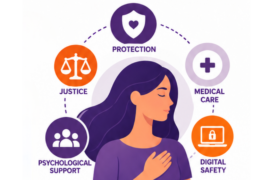
- What measures, timelines, and dedicated budget will the Government establish to ensure that women with disabilities experiencing violence can access disability-inclusive shelters, reporting mechanisms, legal assistance, healthcare, psychological support, and justice, including women with intellectual and psychosocial disabilities and those living in institutions?
Recommendations:
- Amend Law No. 5/2006 and the Law on Social Inclusion of Persons with Disabilities to explicitly recognize intersectional and multiple discrimination, including by defining “underrepresented groups”, “disadvantaged groups”, and “multiple or intersecting vulnerabilities”.
- Guarantee accessible, affordable, and non-discriminatory sexual and reproductive health services for women and girls with disabilities.
- Explicitly prohibit forced sterilization and forced abortion in national legislation and establish effective safeguards to guarantee the free, prior, and informed consent of women and girls with disabilities in all sexual and reproductive healthcare decisions.
- Adopt and adequately fund a comprehensive national response to violence against women and girls with disabilities, including accessible shelters, crisis services, legal aid, psychological support, personal assistance, supported decision-making, and accessible reporting mechanisms.
Comentarii sunt blocate.